Southeast Asian Wedding Planning Guide 2026: Buddhist Monk Ceremony, Thai Outfit Changes & Water Blessing
งานแต่งงาน · Đám cưới · Kasal — the complete planning guide for Thai, Vietnamese, Filipino, Cambodian, and Indonesian weddings.
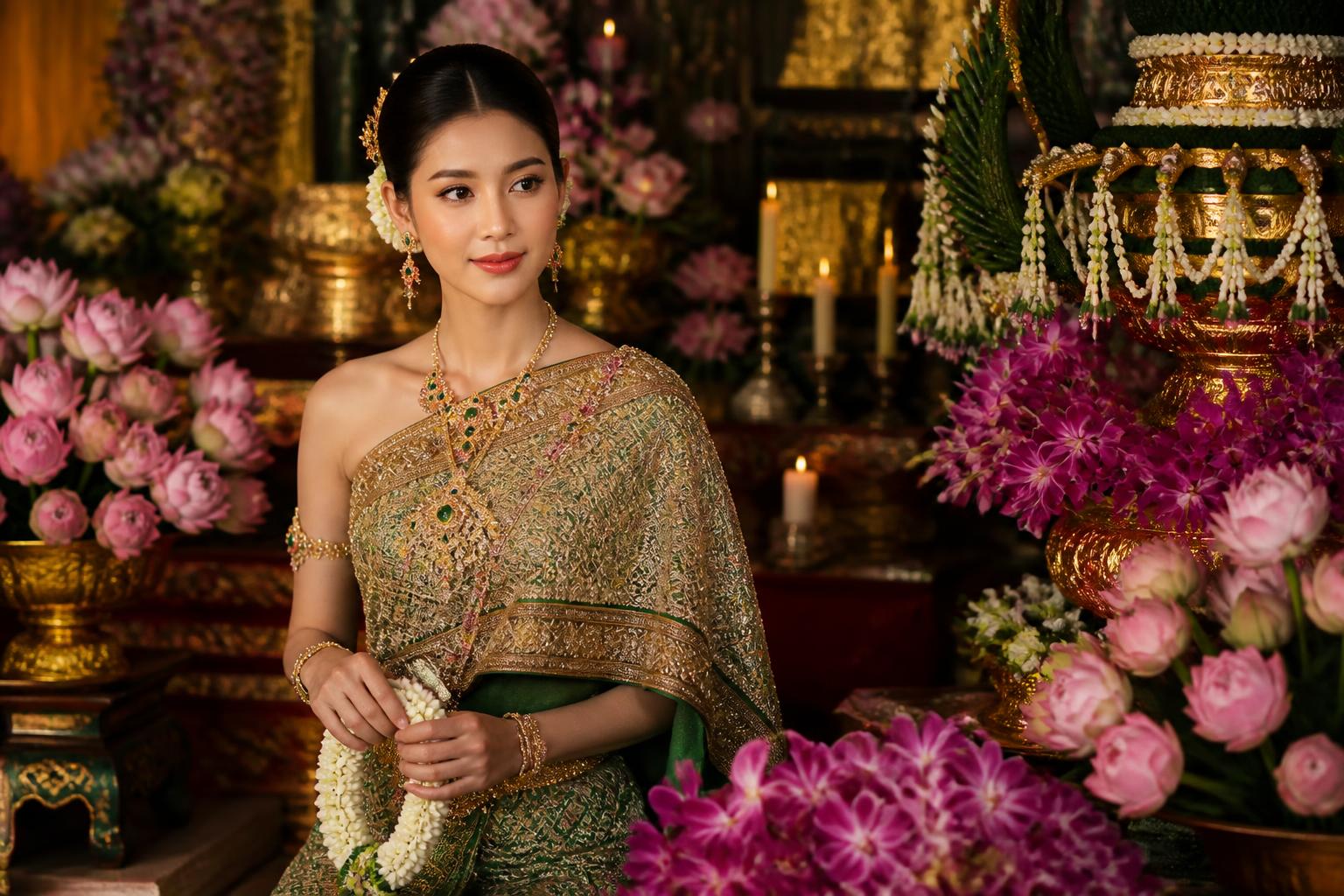
Southeast Asian weddings are among the most logistically complex celebrations in the world — not because they are extravagant, but because they are precise. A Thai wedding that includes a Buddhist monk blessing has a hard deadline of noon that reorganises the entire day. A Vietnamese wedding has an elaborate door-opening ceremony that requires specific gifts in specific quantities. A Filipino reception has a cord-and-veil ceremony that demands exact staging. These are not details. They are the architecture.
This guide covers the operational requirements that define Southeast Asian wedding planning: the Buddhist monk scheduling rules, the Thai outfit change timeline, the Rod Nam Sang water blessing sequence, and the ritual props that every vendor needs to know about before the day.
The Buddhist Monk Blessing — The Noon Deadline
The most important planning rule for any Thai or Cambodian wedding that includes Buddhist monks is this: monks must finish eating and leave the venue before 12:00 noon. This is not a preference. It is a rule of the Vinaya — the code of monastic discipline governing Theravada Buddhist monks. Monks do not eat after midday.
This means the entire wedding morning is scheduled backwards from the noon deadline:
| Time | Activity | Requirements |
|---|---|---|
| 5:30–6:00 AM | Venue setup: altar, cushions, Sai Sin thread | Buddha image facing East, incense, jasmine garlands on altar |
| 6:00–6:30 AM | Monks arrive (5–9 monks typical) | Designated entrance, floor cushions or elevated seating, no applause |
| 6:30–7:30 AM | Merit-making ceremony | Alms bowl provisions per monk, couple presents offerings, guests kneel during chanting |
| 7:30–8:30 AM | Sai Sin (sacred thread) blessing | 50m+ white cotton thread connected from Buddha image through monks' hands to couple |
| 8:30–10:30 AM | Monks' vegetarian meal | Separate dining area, strictly vegetarian Buddhist food, served by family members not caterers |
| 10:30–11:00 AM | White envelope offerings + monks depart | One sealed white envelope per monk (never red — red is for celebrations), bow respectfully, no handshakes |
| 11:00–11:30 AM | Reset venue, couple changes to ceremony outfit | 30-minute buffer before Western ceremony begins |
⚠️ The noon rule is absolute. If the monks' meal runs late — a common problem when families add more food courses than planned — you may find yourself asking monks to leave before they have finished, which is profoundly disrespectful. Brief the family serving the monks' meal to have food ready before 8:30am and served immediately when monks sit.
The Thai Outfit Change Timeline
A traditional Thai bride changes outfits 3–4 times on her wedding day. This is not vanity. Each outfit corresponds to a specific ceremony and has specific cultural significance. The changes are expected. The timeline must be built around them.
Standard 4-Outfit Thai Wedding Timeline
| Outfit | When | For What | Change Time |
|---|---|---|---|
| 1 — Chut Thai (traditional red/gold silk) | 6:00–10:30 AM | Buddhist monk blessing ceremony | Hair + makeup begin 5:00 AM. 40–60 min to dress. |
| 2 — White Western gown | 11:00 AM–2:00 PM | Rod Nam Sang ceremony, family portraits | 25–35 min. 2 bridesmaids needed for corset back. |
| 3 — Evening gown or second Thai outfit | 6:00–10:00 PM | Reception dinner, table rounds, first dance | 20–25 min. Done during cocktail hour transition. |
| 4 — After-party outfit (optional) | 10:00 PM onwards | Late-night dancing | 10–15 min. Private changing room near dance floor. |
The outfit changes are the time budget that every other vendor's schedule must account for. The photographer needs to know when each outfit is being worn. The MC needs to manage guest expectations during each transition. The venue coordinator needs the changing room available and private for each change. None of this is difficult — but it must be explicitly briefed to every vendor in writing before the day.
The Rod Nam Sang — Water Blessing Ceremony
The Rod Nam Sang (รดน้ำสังข์) is the central Thai post-ceremony ritual. After the official ceremony, the couple sits on a decorated wedding bench with their hands joined over a large ceremonial bowl. A conch shell (Sang) filled with blessed water (Nam Mon) is passed from elder to elder. Each elder pours water over the couple's joined hands and offers a blessing.
The Correct Sequence
- Groom's father and mother — poured together or separately, father first
- Bride's father and mother
- Paternal grandparents of groom (if present)
- Maternal grandparents of groom
- Paternal and maternal grandparents of bride
- Respected aunts and uncles — by seniority
- Close family friends and community elders
The ceremony takes 30–60 minutes depending on the number of elders participating. The photographer must be in position before the first elder approaches — this is one of the most significant photo sequences of the day, and moving during it is not acceptable.
What Must Be Prepared for Rod Nam Sang
- Conch shell (Sang) — large, ceremonially clean, sourced from a Thai temple supply store or imported
- Nam Mon (blessed water) — blessed by monks or prepared by a senior elder with white jasmine, gold leaf, and holy water the morning of the wedding
- Mong Kol crowns — twin sacred crowns connected by Sai Sin thread, placed on the couple's heads before the water blessing begins
- Wedding bench (Mon Bench) — an elevated, ornate bench where the couple sits, with the ceremony bowl positioned in front
- Ceremony bowl — large decorative silver or gold-plated bowl to catch the blessed water
- White towels — embroidered soft towels for the couple to dry their hands
Vietnamese Wedding Differences
Vietnamese weddings share some elements with Thai tradition but have their own distinct structure. The core difference is the Lễ Ăn Hỏi (engagement ceremony) and the Lễ Cưới (wedding ceremony), which are typically held on separate days and involve elaborate gift exchanges.
The Lễ Ăn Hỏi involves the groom's family arriving at the bride's home with Mâm lễ — tiered lacquer trays containing betel nut, areca, wine, sticky rice cakes, fruit, and whole roasted pig. The number of trays must be odd (6 or 8 trays are unlucky — Vietnamese tradition favours odd numbers for gifts). Family members carry the trays in a procession and present them at the door. The bride's family receives the trays, returns some items, and formally accepts the engagement.
Filipino Wedding Elements
Filipino Catholic weddings include three symbolic elements that require specific staging: the unity candle, the veil, and the cord (yugal). The veil (belo) is placed over the couple's shoulders by the Ninong and Ninang de Belo (godparents of the veil). The yugal — a large white or gold cord — is draped in a figure-eight around both shoulders by a second set of godparents. Both remain in place for the duration of the ceremony.
The Lechón (whole roasted pig) is the centrepiece of the Filipino reception feast. It is presented whole, carved tableside, and served to every table. Order a whole Lechón for every 50–80 guests. In Toronto, Vancouver, and Sydney, Lechón must be ordered 2–3 weeks in advance from a Filipino caterer — not from a general caterer unfamiliar with the preparation.
Free Southeast Asian Wedding Planning Tools
Buddhist monk scheduler, outfit change timeline builder, Rod Nam Sang water blessing tracker, and ritual prop checklist — all free at Weddings.io.
Open Southeast Asian Wedding Tools →